Boiler Losing Pressure: Causes & How to Fix It
If you find yourself repressurising your boiler every few days or weeks, you have a pressure loss problem. A healthy boiler should hold its pressure for months at a time — if it's dropping regularly, there's a leak somewhere.
What is normal boiler pressure?
A healthy boiler system should sit between 1.0 and 1.5 bar when the system is cold. When the heating is on, the pressure may rise slightly to around 2.0 bar — this is normal. If the pressure drops below 1.0 bar when the system is cold, the boiler may stop working and display a low pressure fault code.
Different brands show this as different fault codes:
- Vaillant: F.22
- Glow-worm: F22
- Ideal: F1
- Baxi: E118
- Worcester Bosch: 1017 (4-digit models)
Why does my boiler keep losing pressure?
There are several possible causes:
1. A leak in the system
This is the most common cause. Water is escaping from somewhere in the system — it could be:
- A dripping radiator valve
- A pinhole leak in a pipe (often under the floor)
- A weeping joint
- A leak in the boiler itself (often the heat exchanger)
Small leaks can be hard to spot because the water evaporates before it pools, especially near hot pipes.
2. A faulty pressure relief valve
The pressure relief valve (PRV) is a safety device that releases water if the pressure gets too high. If the valve is faulty, it can let water out even when the pressure is normal, causing the pressure to drop.
You can check this by looking at the copper pipe that comes out of the PRV (usually outside, near the boiler). If it's dripping, the PRV may be faulty.
3. A faulty expansion vessel
The expansion vessel absorbs the extra pressure created when water heats up. If the vessel has lost its air charge or the diaphragm has split, the pressure will rise too high when the heating is on and then drop too low when it cools — and the PRV will let water out.
4. Air in the system
Trapped air can cause pressure fluctuations. Bleeding your radiators can help stabilise the pressure.
5. Recently bled radiators
If you've just bled your radiators, the pressure will drop because you've released air (and a little water). Simply repressurise the system once.
Can you fix it yourself?
There are a few things you can check:
-
Check for visible leaks — Look around all radiators, valves, and visible pipes for signs of water.
-
Check the pressure relief valve — Look at the PRV discharge pipe outside. If it's dripping, the PRV may need replacing.
-
Bleed the radiators — Remove any trapped air.
-
Repressurise once — Top up the pressure to 1.5 bar and see if it holds. If it drops again within a few days, you have a leak.
If the pressure keeps dropping, you need a Gas Safe registered engineer to find and repair the leak.
How a professional diagnoses pressure loss
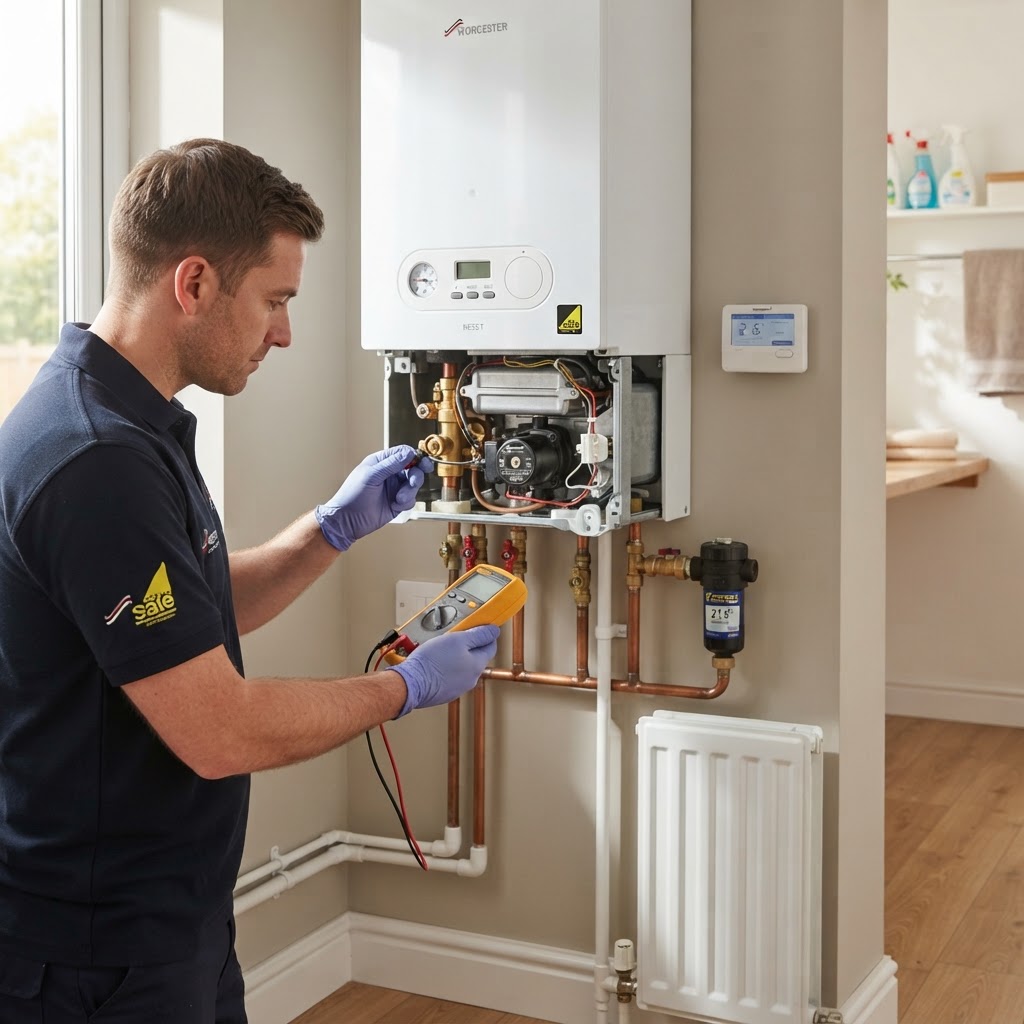
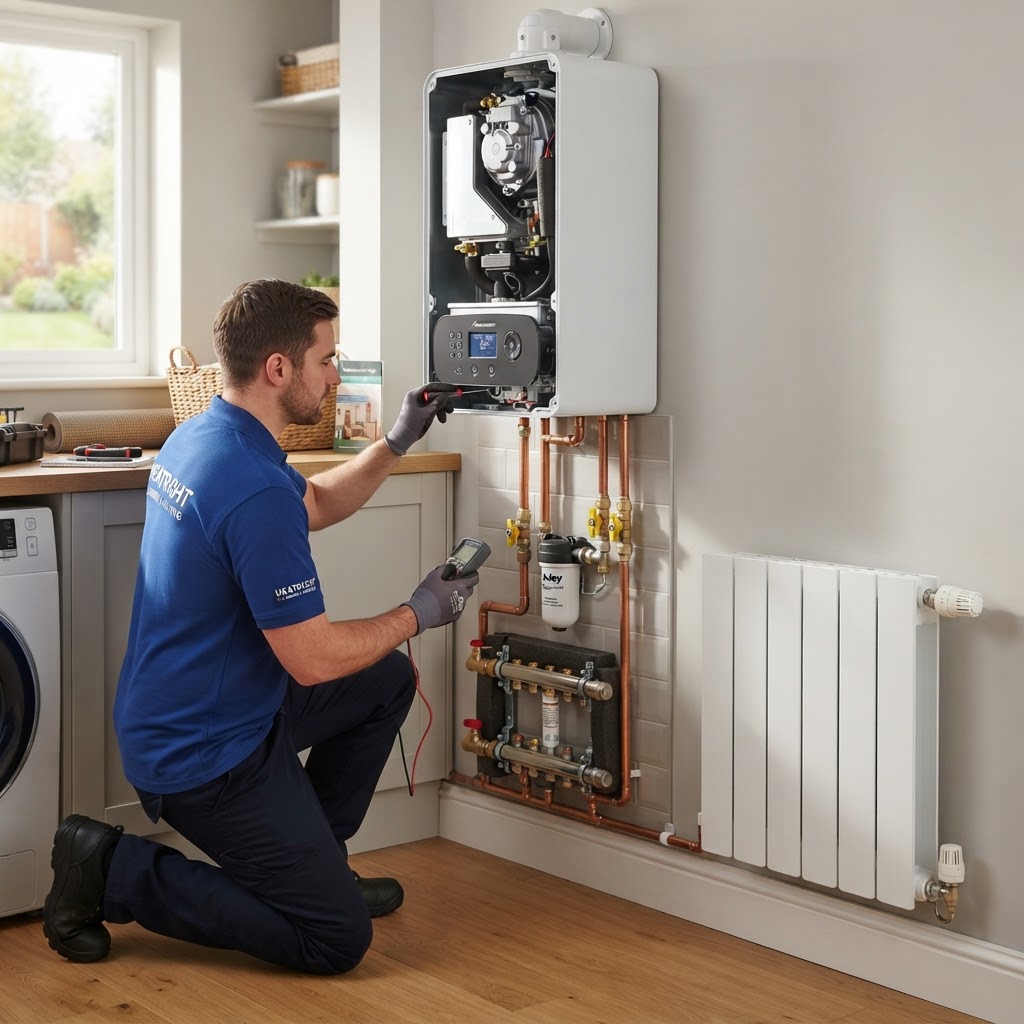
A Gas Safe engineer will:
-
Pressure test the system — Isolate different parts of the system to narrow down where the leak is.
-
Check the pressure relief valve — Test whether the PRV is letting water through when it shouldn't.
-
Check the expansion vessel — Test the air charge in the expansion vessel and repressurise or replace it if needed.
-
Inspect the heat exchanger — Check for internal leaks in the boiler.
-
Find hidden leaks — Use thermal imaging or pressure testing to locate leaks under floors or in walls.
Need help with a boiler losing pressure?
Sanju's Heating covers Newbury, Basingstoke and Reading. We're Gas Safe registered and can find and repair pressure loss issues with transparent pricing.
Call us on 01635 74 50 40 or book online at sanjusheating.co.uk/book