Is your heating system making strange gurgling noises, or are some of your radiators cold at the bottom? These are often the first signs of corrosion and the buildup of magnetite sludge inside your central heating circuit. At Sanju's Heating & Plumbing, we frequently visit homes across Newbury, Berkshire, Hampshire, and Oxfordshire to find systems that have been left unprotected, leading to premature boiler failure.
What is Central Heating Inhibitor?
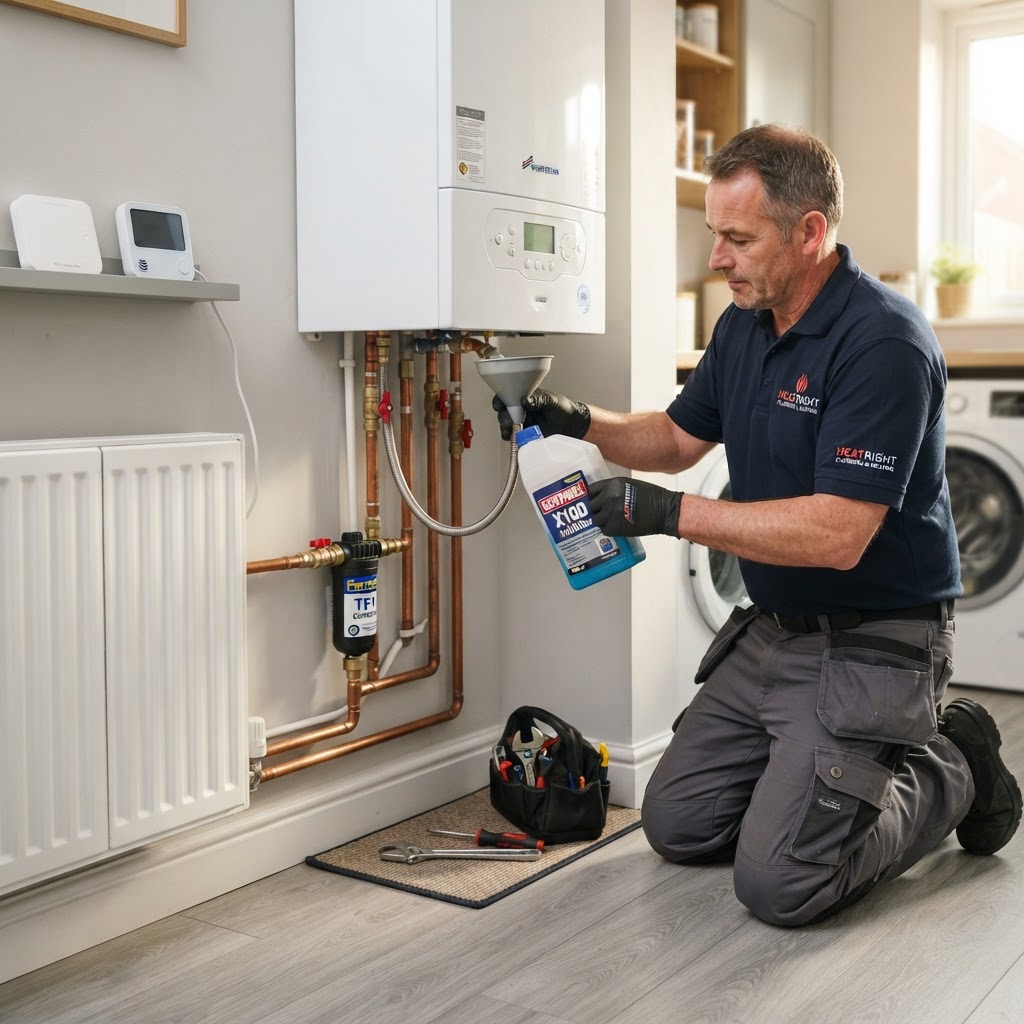
Central heating inhibitor is a chemical treatment specifically designed to be added to your water circuit. It acts as a protective shield for the internal components of your boiler, pipes, and radiator metalwork. Without this chemical buffer, the internal surfaces of your system are constantly exposed to water and oxygen, which leads to rust and the accumulation of debris.
How Corrosion Damages Your System
When water reacts with the steel or iron inside your radiators, it produces a fine, black, magnetic substance known as black iron oxide (magnetite). This sludge is problematic for three main reasons:
- It acts as a thermal barrier, meaning your radiators take longer to heat up and require more energy to reach your desired temperature.
- It acts as an abrasive, which can cause significant damage to the pump and heat exchanger of your boiler.
- It settles in low-flow areas, leading to cold spots in your radiators and uneven heating throughout your home.
Why Your System Needs Regular Dosing
Many homeowners mistakenly believe that their heating system is a sealed loop that never needs maintenance. While it is true that you do not need to replace the water often, the inhibitor solution breaks down over time as it does its work. If you have recently had a new boiler installed or a radiator replaced, your system needs a fresh dose of chemical protection.
Safety Warning: Always use a Gas Safe registered engineer for any work involving the internal components of your boiler or the draining of your heating system. Attempting to add chemicals incorrectly can lead to system airlocks or leaks.
If you live in our service area across Oxfordshire or Hampshire, we recommend having your inhibitor levels checked during your annual boiler service. We use specialized test kits to determine if your system is still protected or if it needs a top-up.
Signs Your System is Lacking Protection
How can you tell if your system has been neglected? Keep an eye out for these tell-tale signs:
- Discoloured bleed water: If you bleed a radiator and the water comes out dark grey or black, this is a clear sign that corrosion is already present.
- Boiler noise: A metallic banging or 'kettling' sound often indicates that heat exchanger surfaces are coated in sludge, preventing proper heat transfer.
- Cold spots: Radiators that are cold at the bottom while the top is warm are usually suffering from a buildup of sediment that the water cannot circulate past.
The Benefits of a Clean, Inhibited System
Maintaining the correct levels of inhibitor is one of the most cost-effective ways to improve energy efficiency. A system free of sludge works exactly as the manufacturer intended, which lowers your monthly gas bills and reduces your carbon footprint.
- Extended Appliance Life: Protecting the heat exchanger prevents the most expensive part of your boiler from failing prematurely.
- Reduced Callouts: Preventing sludge buildup means fewer blocked valves and pump failures.
- Higher Efficiency: Clean radiators radiate heat much more effectively, keeping your rooms warmer for longer.
Keeping Your Heating System Healthy
At Sanju's Heating & Plumbing, we are passionate about helping our local customers in Newbury and surrounding areas keep their homes warm and efficient. Adding inhibitor is a simple, proactive task that can save you a significant amount of money on repairs in the long run.
If you suspect your system has not been treated, or if it has been more than two years since your last system health check, it is time to act. Contact us today to book an inspection and ensure your heating system remains in top condition for the colder months ahead.