As the seasons change in Newbury and throughout Berkshire, Oxfordshire, and Hampshire, you might notice your home feels a little less cosy than it used to. While we often blame the weather, the culprit is frequently hiding inside your pipes: central heating sludge. Over time, rust and debris accumulate within your heating system, creating a thick, muddy substance that hinders water flow and forces your boiler to work harder than necessary.
Why Does Sludge Build Up in My Pipes?
Central heating systems are essentially closed loops of water. Over many years, the oxygen inside the water reacts with the metallic components of your radiators and pipework, leading to internal corrosion. This process, known as oxidation, creates small particles of iron oxide, or 'magnetite'.
These particles circulate through your system whenever your pump is running. Eventually, they settle in the quietest, coolest parts of the system—usually the bottom of your radiators or the narrow channels of your heat exchanger. This build-up acts as an insulator, preventing heat from transferring effectively into your rooms.
Spotting the Warning Signs
If you are wondering whether your home is suffering from a sludge-related blockage, there are several common indicators you can check for yourself:
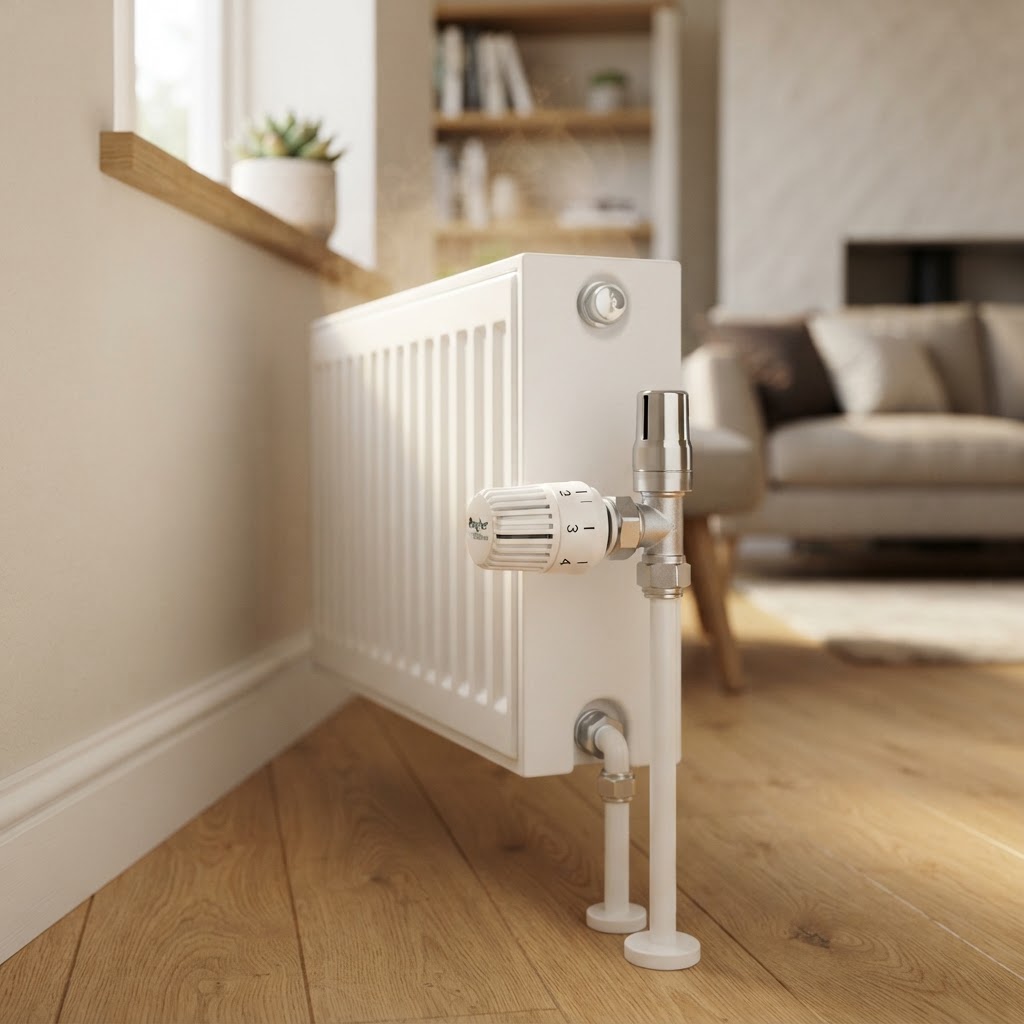
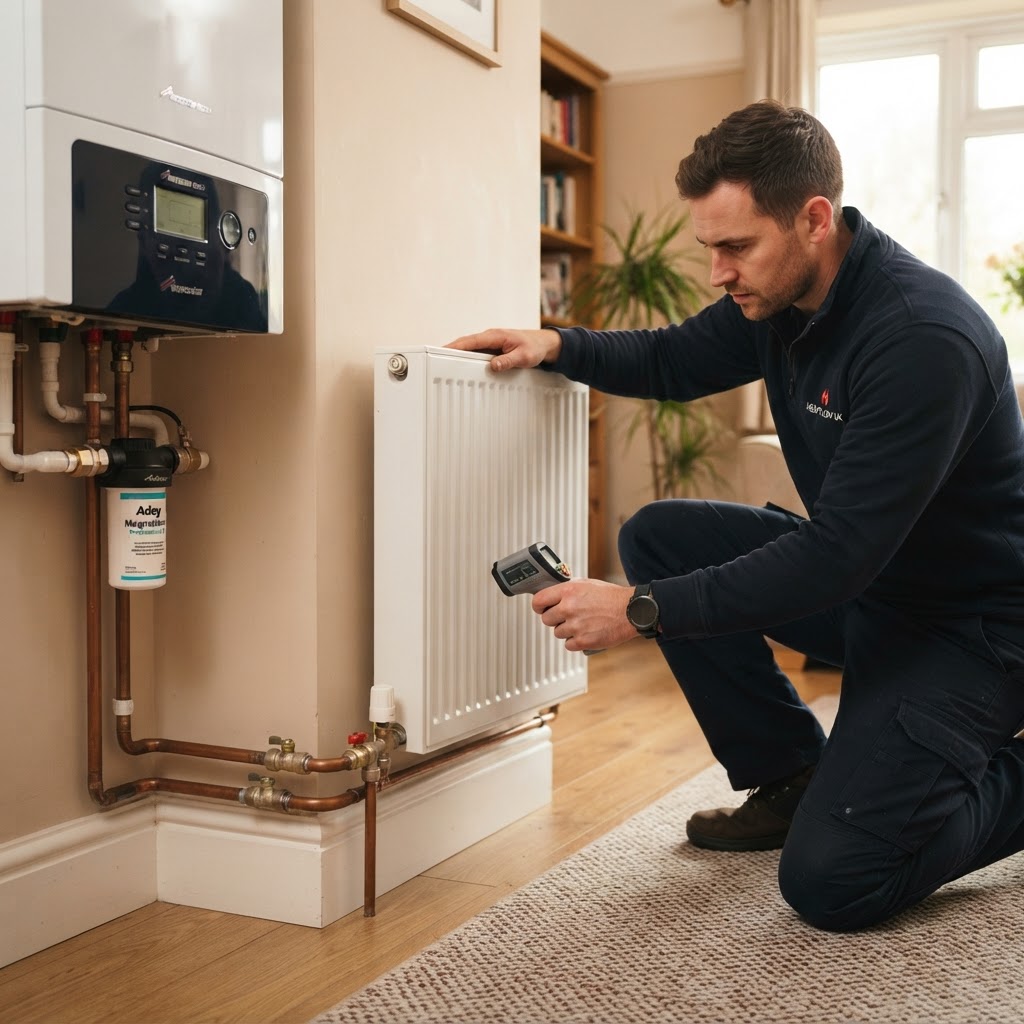
- Cold spots on radiators: If the bottom of your radiator remains stone cold while the top is warm, it is a classic sign that sludge has settled at the base.
- Frequent boiler noise: If your boiler is making a 'kettling' sound, it could be caused by restricted flow around the heat exchanger.
- Slow heating times: It takes significantly longer for your radiators to reach their desired temperature.
- Discoloured bleed water: When you bleed a radiator, if the water that comes out is dark, murky, or black rather than clear, your system needs attention.
- Frequent pump failure: The build-up of abrasive debris can cause your central heating pump to seize up or fail prematurely.
What is a Power Flush?
A power flush is the most effective way to restore your heating system to its former glory. It involves connecting a high-flow, low-pressure pumping unit to your system, which pushes a powerful cleaning solution through your radiators, pipes, and boiler.
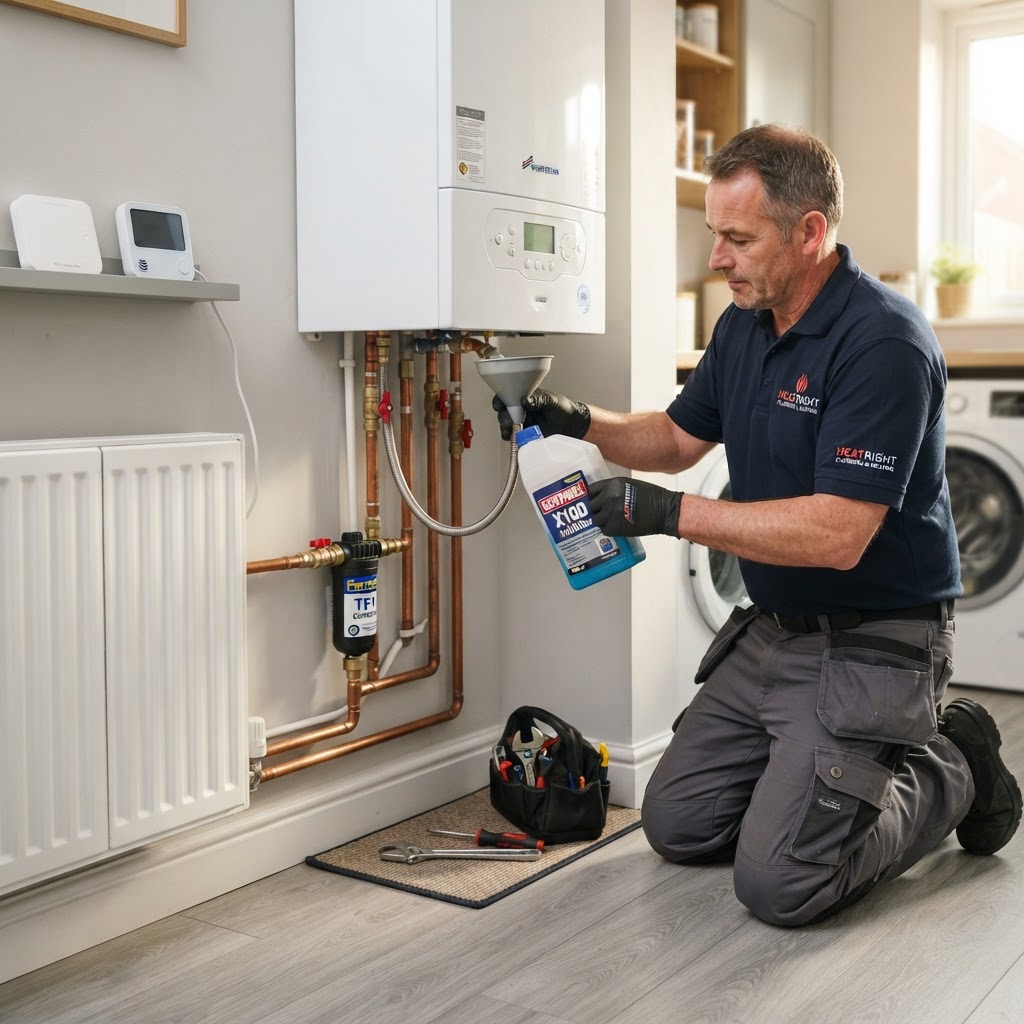
This process dislodges years of compacted debris and rust. The machine then flushes this waste out of the system entirely, replacing it with fresh, clean water treated with high-quality chemical inhibitors to prevent future corrosion.
Important: Never attempt to use DIY chemical cleaning kits if you are unsure of your system's integrity. Always ensure you hire a professional to carry out a full power flush to avoid damaging ageing pipework or seals.
Professional Care for Your Home
At Sanju's Heating & Plumbing, we pride ourselves on being a local family business. We know how important a reliable heating system is during our chilly British winters. If you notice any of the signs mentioned above, it is worth getting a professional assessment before a minor sludge issue turns into a major boiler breakdown.
- Contact a professional: Reach out to us to discuss the age and condition of your system.
- Assessment: We will inspect your system to ensure a power flush is the appropriate solution.
- The Flush: We carry out the deep clean using industry-standard equipment.
- Inhibition: We add high-grade inhibitor to protect your system from future build-up.
Safety First: Always Choose Gas Safe
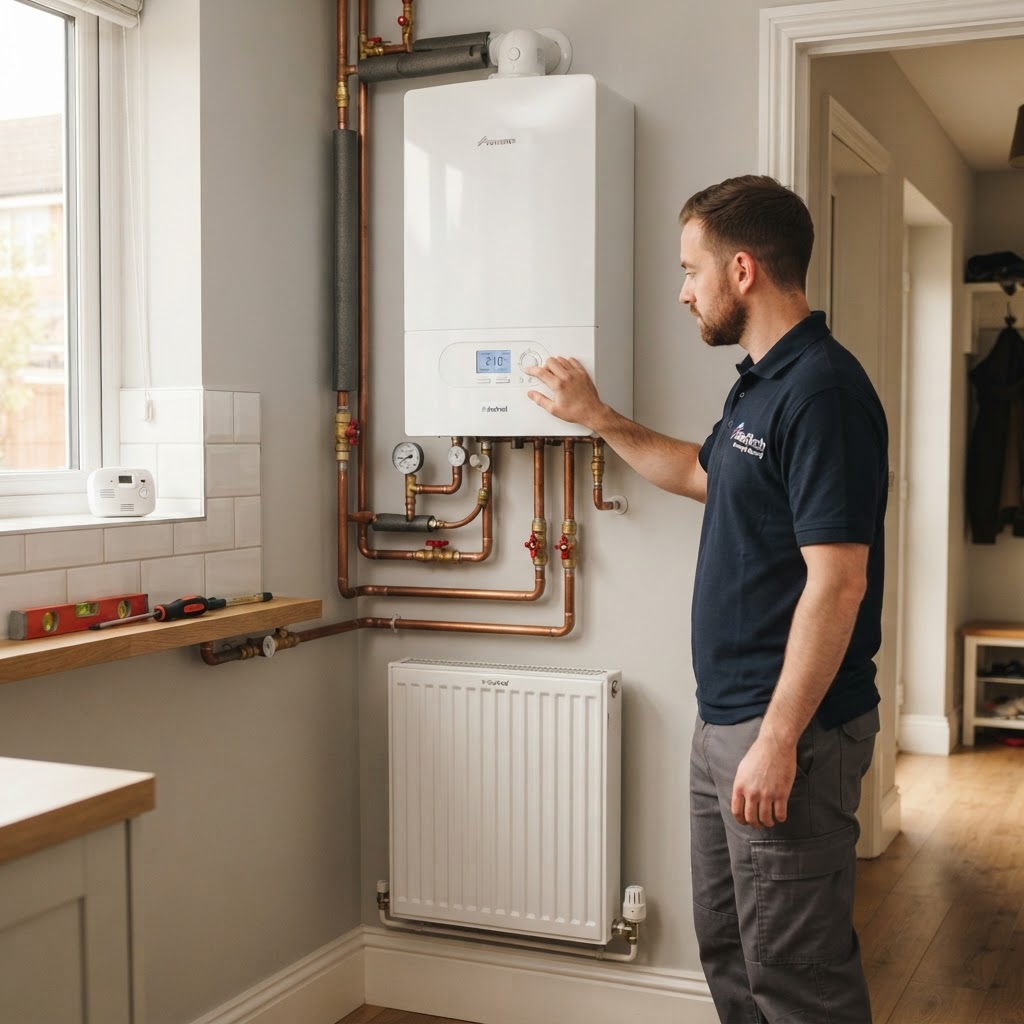
When it comes to your heating system, safety is non-negotiable. Whether you are looking for a system power flush or a simple radiator repair, always use a Gas Safe registered engineer. This ensures that the work is carried out to the highest safety standards and complies with all current UK building regulations.
For residents in Newbury, Berkshire, Hampshire, and Oxfordshire, our team is here to provide honest, reliable advice. Don't let sludge compromise your comfort or increase your energy bills this year. Give your system the maintenance it deserves to keep your home warm, efficient, and safe.