Are you tired of certain rooms in your house feeling like a sauna while others remain shivering cold? If your home has Thermostatic Radiator Valves (TRVs) installed, you have a powerful tool at your disposal to balance your heating system. At Sanju's Heating & Plumbing, we often find that homeowners in Newbury and across Berkshire, Hampshire, and Oxfordshire are missing out on significant energy savings simply because they don't know how to set these clever little valves correctly.
What Exactly Is a Thermostatic Radiator Valve?
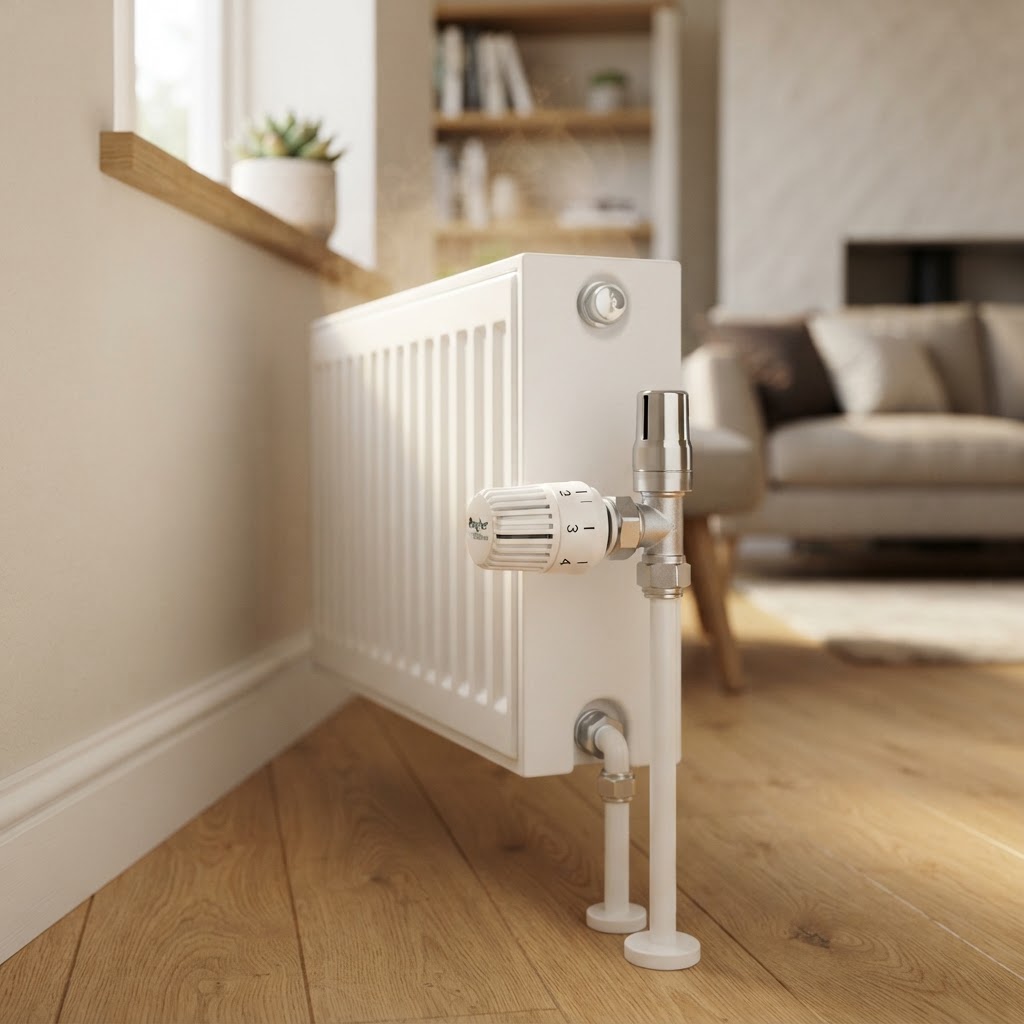
A TRV is a self-regulating valve fitted to the side of a radiator. Unlike a standard manual valve which simply turns the flow of hot water on or off, a TRV detects the ambient room temperature. As the room warms up to your desired level, the wax or liquid sensor inside the valve head expands, gradually closing the valve to restrict the flow of hot water into that specific radiator.
Why Use Them Instead of a Room Thermostat?
Your main room thermostat controls the entire house based on the temperature in one specific location, usually the hallway. This means other rooms might overheat unnecessarily. By using TRVs, you can set different temperatures for individual rooms, ensuring you aren't wasting gas by heating an empty spare bedroom or an unused home office to the same level as your living room.
Understanding the Numbers on Your TRV
Most TRV heads feature a dial marked with numbers, typically ranging from 0 to 5 or a snowflake symbol. Many people assume these correspond to the heat output, but they actually represent a temperature range. While brands vary, a standard scale usually looks like this:
- Snowflake/Asterisk: Frost protection mode, usually keeping the room around 7 degrees Celsius to prevent pipe freezing.
- 1: Approximately 12-14 degrees Celsius.
- 2: Approximately 16 degrees Celsius.
- 3: Approximately 18-20 degrees Celsius (ideal for living areas).
- 4: Approximately 22-24 degrees Celsius.
- 5: Keeps the radiator at maximum heat output regardless of room temperature.
Safety Warning: Never attempt to remove or replace radiator valves if you are not confident in your DIY skills. If you notice a leak from your valve, contact a professional immediately. For any work involving the removal of pipes, always use a Gas Safe registered engineer to ensure your heating system remains safe and compliant.
Expert Tips for Maximising Efficiency
To get the most out of your heating system, follow these practical steps to optimise your room temperatures:
- Identify unused rooms: Turn TRVs down to the frost protection setting (or 1) in rooms you rarely use, such as a guest bedroom or storage area.
- Set living areas correctly: Set your main living room and kitchen valves to 3 or 4, depending on your comfort preference.
- Don't obstruct the sensor: Never place curtains or heavy furniture directly in front of the radiator. If the sensor is covered, it will think the room is hotter than it actually is and turn the radiator off prematurely.
- Balance the house: If you notice a room never reaches temperature, your heating system might need balancing. This is a technical process best handled by a heating engineer.
Common Problems With TRVs
If you find that a radiator stays cold even when the dial is set high, the internal pin inside the valve may be stuck. This is a common issue, especially after a long summer of the heating being off. You can often fix this by removing the plastic head and gently pressing the small metal pin with a pair of pliers; it should spring back out freely. If the pin is completely seized or the valve is leaking, it is time to call in the experts at Sanju's Heating & Plumbing. We provide reliable plumbing services throughout Newbury and the surrounding counties, ensuring your home stays warm and efficient throughout the winter months.
When to Upgrade Your Valves
Are your valves twenty years old, stiff to turn, or leaking? Upgrading to modern, high-quality TRVs can drastically improve the responsiveness of your heating system. Modern valves are more sensitive to temperature changes and can help you shave money off your annual energy bills. If you are considering a full system upgrade or simply need a few valves replaced, get in touch with our team today. We pride ourselves on being a local family business that puts the comfort and safety of our customers in Berkshire, Hampshire, and Oxfordshire first.